

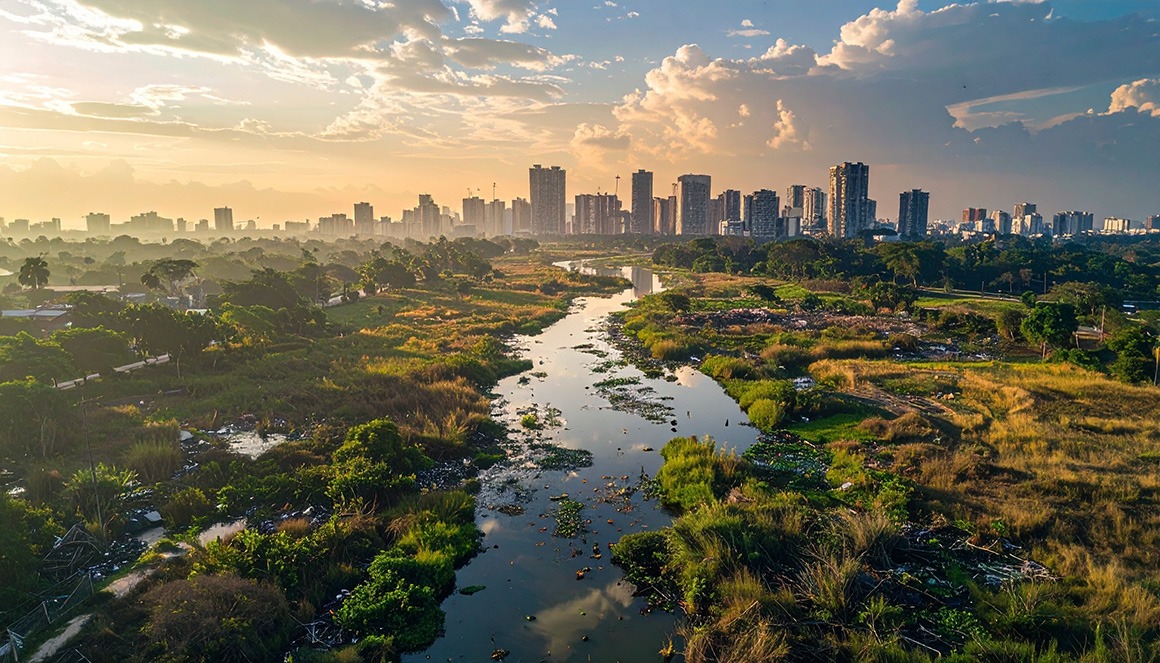
Is moving to the countryside selfish? The “City-Outpost” model doesn’t view this as an escape from fellow human beings, but rather as a strategic retreat and base: for rest, for preparation, and to have an effective impact on the city from there. By Kai Mester
Reading time: 4 minutes
What kind of selfish people are these who retreat to the countryside to live the good life and remove themselves from danger? Shouldn’t Christianity rather be a religion of love for one’s neighbor, whose followers care for their fellow human beings?
“Seek the welfare of the city!”
The City Outpost model answers this question. The retreat to the countryside is meant to serve the purpose of becoming more effective in serving others. A City Outpost is an outpost or base from which one can have an impact on the city. This base offers all the advantages of country life, yet is close enough to the city to allow visits without having to stay overnight.
Spaces in the city can be rented so that one can, for example, run a snack bar or a medical practice, hold lectures, seminars, or worship services, or undertake other charitable initiatives.
“Seek the welfare of the city where I have carried you into exile, and pray to the LORD on its behalf.” (Jeremiah 29:7)
Help from Outside
Upon closer inspection, this model is not foreign to the Bible either. Abraham lived in the mountains and came to Lot’s aid in Sodom when he was carried off by hostile armies. Here we see that it is possible to come to the aid of the city from the countryside (Genesis 14:1–16).
Moses learned to be a shepherd in the wilderness of Midian before he led the people of Israel out of Egypt into that very same wilderness. Although the distance between Midian and Egypt was far greater than a day’s journey, Midian nevertheless served as an outpost for this immense mission of bringing a nation of millions out of Egypt (Exodus 2:15; 4:20).
Prophets such as Elijah, Jonah, Amos, and others also visited the cities from the countryside, to which they repeatedly returned after fulfilling their missions. #
Jesus and the City
But the Messiah most clearly demonstrated to us how one can reach the city from the countryside. During the first two years of his ministry, he visited the city of Jerusalem for the Passover in the spring (John 2–3; 5). In the third year of his ministry, he visited the city twice—once for the Feast of Tabernacles in the fall (John 7:1–10:21) and once for the Feast of Dedication in the winter (John 10:22–42). Even during this last visit, he appears to have used the home of Martha, Mary, and Lazarus in Bethany as a base for his ministry in the city (Luke 10:38–42). The village was located three kilometers outside Jerusalem.
In the week before his crucifixion, Jesus made at least four visits to the city (Matthew 21–26); it was not until the last night that he spent the night in the Garden of Gethsemane on the Mount of Olives.
An Ark as a Refuge
When Noah built the ark, he did so away from the cities. This construction project required a great deal of wood. It would have been too costly and impractical not to undertake it in the immediate vicinity of a forest. The long construction period was in itself a safeguard against the moral corruption of the cities, while the ark itself served as a refuge for people and animals from the flood.
Later, there were six “cities of refuge” in Israel where those who had accidentally killed someone could find safety from their avengers. Three mountain villages east of the Jordan (Bezer, Ramoth, Golan) and three to the west (Hebron, Shechem, Kedesh). Otherwise, only temple servants lived in these places. They were distributed throughout the land in such a way that, from anywhere in the country, one was no more than fifty kilometers from the nearest city of refuge. In a certain sense, these places also served as outposts.
Revelation warns of a time when people who follow Jesus in everything—including the observance of the Sabbath—will no longer be able to buy or sell, and will even be killed (Revelation 13:15–17; 14:1–5). In such times, these agricultural bases could become important places of refuge.
Even today, we can offer open doors to stressed and troubled people, where they can recharge and relax—either in complete privacy or in small wellness and seminar centers set in nature. The spaces and activities in the city can serve as a starting point for this.
Leave a Reply