

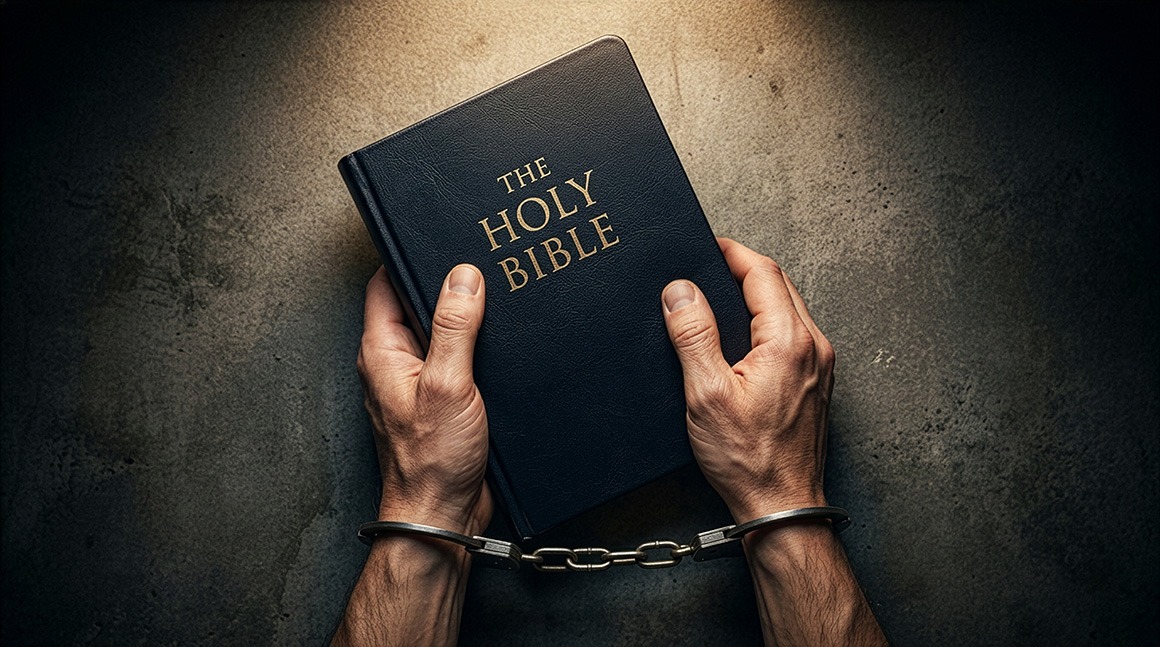
The disciples were expecting a Messiah who would free them, protect them, and lead them to victory. But Jesus took a completely different path. Could it be that we, too, are preparing for the final events with false expectations? By Kai Mester
Reading time: 10 minutes
The Jews in Jesus’ time had quite specific ideas and expectations regarding the coming of the Messiah. Their hope clung to the vision of a savior who would break the Roman yoke and free them from humiliation and bitter poverty. What they sought was the reversal of their misery: the exchange of oppression for freedom, of powerlessness for self-determination. They dreamed of the reestablishment of a powerful, independent kingdom—glorious and peaceful as in the days of Solomon.
But their longing went beyond the political: groups such as the Essenes also sought spiritual liberation. They yearned for the purification of the temple and the overthrow of the corrupt priestly caste in order to restore God’s holy order.
John the Baptist and his disciples, too, had similar expectations:
When even John doubted Jesus
John proclaimed: “But the one who comes after me is mightier than I, and I am not worthy to carry his sandals; he will baptize you with the Holy Spirit and with fire. He has the winnowing fork in his hand, and he will separate the chaff from the wheat and gather his wheat into the barn; but the chaff he will burn with unquenchable fire” (Matthew 3:11–12).
However, when Jesus did not exercise judgment in the immediate way John had expected and left the political order untouched, John began to doubt. From prison, he sent word to Jesus asking, “Are you the one who is to come, or should we wait for another?” (Matthew 11:2–3).
Who will ultimately sit in the best seats?
The sons of Zebedee asked, “We would like to sit next to you in places of honor in your glorious kingdom … one at your right hand and one at your left.” (Mark 10:37 NL)
There were also disputes among the other disciples about which of them was the greatest (Luke 22:24; Mark 9:33–34). Apparently, they were preoccupied with the question of what rank and significance they would hold in Jesus’ coming kingdom. They had difficulty letting go of their familiar notions of worldly power and hierarchy.
The disciples on the road to Emmaus summed it up after the crucifixion: “But we had hoped that he was the one who was going to redeem Israel.” (Luke 24:21)
Why a Suffering Messiah Didn’t Fit the Picture
On the one hand, Jesus healed many who were sick, cast out demons, fed thousands, and even raised the dead. On the other hand, the disciples could hardly comprehend that their Messiah was to suffer and die. When Jesus foretold his suffering, Peter, horrified, objected: “May this never happen to you!” (Matthew 16:22). And when Jesus spoke again of his death, “they did not understand what he was saying, and they were afraid to ask him” (Mark 9:32).
Even the death of Lazarus did not fit into their picture. His sister Martha summed up her disappointment: “Lord, if you had been here, my brother would not have died.” (John 11:21). John the Baptist, too, had since been executed (Matthew 14:10–12). Why hadn’t Jesus protected him?
They longed for peace, yet Jesus even foretold divisions within their own families: “I have not come to bring peace, but a sword.” (Matthew 10:34) They hoped for freedom and self-determination, but Jesus demanded self-denial and a willingness to carry one’s own cross (Matthew 16:24). They expected prosperity and security, yet he told the rich young man to sell his possessions and give to the poor (Mark 10:21). And when he sent them out, he did not promise them a triumphant victory march, but warned: “I am sending you out like sheep among wolves.” (Matthew 10:16)
Jesus had even explicitly foretold that one of their inner circle—one of the Twelve—would betray him: “One of you will betray me!” (Matthew 26:21). But this was so unimaginable to them that each one asked in dismay, “Lord, is it I?” (Matthew 26:22). This prediction, too, fit just as poorly into their picture of things as the impending suffering of their Messiah.
Even Peter could not believe that he would fail at the decisive moment and deny Jesus. “‘Even if I have to die with you, I will never deny you.’ All the disciples said the same thing.” (Matthew 26:35) Yet soon enough, they all abandoned him, and Peter denied him three times. And when Jesus finally died on the cross like a criminal, everything on which they had pinned their hopes seemed lost for good.
Faith That Sustains Even in Difficult Times
And yet Jesus had proclaimed: “Come to me, all you who are weary and burdened, and I will give you rest.” (Matthew 11:28) “My yoke is easy, and my burden is light.” (Matthew 11:30) “If the Son sets you free, you will be free indeed.” (John 8:36) “Whoever drinks the water I give him will never thirst again; rather, the water I give him will become in him a spring of water welling up to eternal life.” (John 4:14)
By Pentecost at the latest, this apparent contradiction had been resolved for the disciples. Thousands of people experienced inner refreshment, a gentle yoke, a light burden, true freedom, and their longings satisfied. They themselves became springs of living water for others. None of this happened because their external circumstances had become easier. On the contrary: they endured persecution, imprisonment, abuse, and in many cases even martyrdom. And yet they had found something that no external power could ever take away from them.
Later, the apostles wrote: “I rejoice in the sufferings I endure for you.” (Colossians 1:24) “Rejoice that you share in the sufferings of Christ.” (1 Peter 4:13) “Consider it pure joy when you face various trials.” (James 1:2) “We rejoice even when worries and problems beset us.” (Romans 5:3 NL) “Yes, for Christ’s sake, I can wholeheartedly accept that I must live with weaknesses and endure mistreatment, hardships, persecution, and tribulations. For it is precisely when I am weak that I am strong.” (2 Corinthians 12:10 NGÜ)
Do we have our own expectations for the end times?
Adventists have something in common with the disciples: They, too, have fairly specific ideas and expectations regarding the coming of the Messiah. Their hope centers on salvation and preservation. The seal of God—which we understand to be the Sabbath—is meant to protect them from the image of the beast, the mark, and the foretold decree of death. Even children’s stories tell of how God intervenes today to help, protect, heal, and grant victory. Similarly, mission stories and personal experiences of faith recount great successes and God’s supernatural intervention on behalf of His people or individual servants.
And indeed: For which Adventist do the testimonies of men of faith such as Roger Morneau, Mark Finley, Ben Carson, Doug Batchelor, Walter Veith, David Gates, Pavel Goia, Franz Hasel, Kurt Hasel, Paul Kowoll, and Helmut Haubeil not give you pleasant goosebumps or bring tears of emotion to your eyes?
Only heaven knows how many more people have been encouraged by such testimonies of faith to devote their lives entirely to God’s service—far more than we could ever quantify statistically.
Numerous ministries, much like the Essenes of old, are committed to purifying God’s “temple”: through the health message, rural living and gardening, sacred music, dress reform, homeschooling, church schools, and upholding pure biblical doctrine. Others are fighting for a return to the fundamentals of the faith and a comprehensive spiritual renewal. Depending on their perspective, level of understanding, range of experience, and personal faith journey, they set different focuses and priorities and are, naturally, often convinced of the extraordinary importance of their mission.
Anyone who attends ASI and OCI conferences, is familiar with events organized by AdAgrA or “Hoffnung weltweit” where mission organizations set up booths, or browses YouTube will gain insight into the diversity and dedication of this movement.
Are we more like the disciples than we realize?
Do we compare ourselves to one another? Do we sometimes close our eyes and ears to everything that isn’t supposed to be? To scandals, broken families, serious illnesses, and deaths that simply don’t fit into our picture? We certainly notice them, but we prefer to talk about them behind closed doors. We don’t want our success story to be tarnished. Perhaps we ourselves aren’t quite sure how to reconcile such experiences with our image of God and our expectations of His intervention.
Could it be that Jesus, through all the hardships and unexpected events of our life of faith—just as He did with the disciples—wants to prepare us for a kind of Gethsemane and Golgotha? What if, as with John the Baptist, God intervenes in a way we didn’t expect? Might we then also ask: “Am I still in the right place for the latter rain and the loud call—or should I be waiting for something else?”
Are we, too, sometimes more preoccupied with our spiritual successes, our status, and our insights than with the question of what Jesus truly expects of us? Might we, too, one day say in disappointment, “But we had hoped…”?
Can we imagine that God does not protect His church from every defeat, illness, division, and persecution? That even faithful, prayerful people die, that trusted brothers and sisters in the faith fail, and that some things turn out very differently than we had imagined?
Are we perhaps just as certain of our own steadfastness as Peter was back then?
Are we perhaps setting our children and the newly baptized up for deep disappointment through our narrative of success? For the moment when their edifice of faith collapses like a house of cards—when, for example, a teacher they admired falls from his pedestal, or when, like Martha and Mary, they are struck by a severe blow of fate?
Above all, though: What if the unexpected strikes on a massive scale? Just as it did during the genocide in Rwanda, when Adventists were found among both the victims and the perpetrators—and even among those who aided the murderers?
Are we prepared for martyrdom—or only for preservation?
What if the final events entail far more martyrdom than we generally expect? And is martyrdom really just dying at the hands of a persecutor? Could it not also be that, for Jesus’ sake, we go through illness, accidents, loss, and other severe blows of fate because the dark forces are at work against God’s children? Or might God perhaps also choose to reveal Himself precisely in the fact that we—like Jesus—share in the sicknesses and pain of this world and do not resist the full force with which the consequences of sin strike this world?
Jesus said, “Do not resist evil!” (Matthew 5:39 NGÜ) And Paul explains, “Do not be overcome by evil, but overcome evil with good.” (Romans 12:21)
What if God’s power were to be revealed in a completely different way?
What this very last time before Jesus’ return is all about is that God’s nature will once again envelop the earth in a warm, inviting light. Everyone should be able to recognize what they are choosing: life with God or against Him. God’s invitation remains open until the very end: He wants to bring people into the Ark—into the New Jerusalem, which will one day lead the redeemed through the sea of fire of the elements into the new world.
The believers will be refreshed inwardly. They bear the gentle yoke and the light burden of the Lamb. They are truly free; their longing is satisfied, and they themselves become springs of living water for others. This holds true during persecution, imprisonment, and mistreatment, as well as during illness, misfortune, and even death. For their connection to Christ does not depend on whether they are outwardly preserved. One group, however, will experience the return of Jesus without tasting death: the 144,000.
Following the Lamb—Even When the Path Takes a Different Turn
“Then I saw the Lamb standing on Mount Zion. With him were 144,000 people, and his name and his Father’s name were written on their foreheads. Then I heard a sound from heaven that was like the roar of a mighty surf and like a thunderous roll, yet at the same time it sounded like the singing of harpists. This great choir sang a new song before the throne, the four living creatures, and the elders. And no one except the 144,000 redeemed ones, whom God has ransomed from among humanity, could learn this song. They had not been found guilty of any unfaithfulness toward the Lamb, but had kept themselves unblemished and pure like a bride, and they follow the Lamb wherever He goes. They were the first to be redeemed for God and the Lamb. They are blameless; no falsehood can be laid to their charge.” (Revelation 14:1–5)
Leave a Reply